


Threads
Threads is a social app from Instagram that I see as a place for short, conversational posts rather than a complete replacement for every network you already use. It is free to install, aimed at a Teen audience, and its basic appeal is easy to understand: you open it when you want to share a thought, follow ongoing conversations, or see what people are discussing without preparing a polished photo or long article.
After spending time with it, my view is fairly simple. Threads works best when you treat it as a conversation layer, not as your entire social life. It is quick to browse, familiar enough for people who already know Instagram, and capable of feeling more relaxed than image-first social platforms. At the same time, the experience depends heavily on who you follow, how carefully you manage your feed, and whether you actually enjoy public discussion.
What I would consider before moving to Threads
My first decision criterion would be the kind of attention I want from a social app. If I want visual discovery, saved images, or a carefully arranged personal gallery, Instagram remains the more natural fit. If I want fast public reactions and compact opinions, Threads makes more sense. If I mostly need private messages, organized groups, or a quiet space for a small circle, I would look elsewhere instead of forcing this app into a role it was not designed to fill.
Related News

How Facebook Lite Redefines Mobile Connectivity in Emerging Markets

Threads in Real Life: Who Should Join, Lurk, or Leave

Threads: Redefining Intimate Social Connections
The second criterion is the quality of my starting network. A social feed is not automatically interesting just because the application is popular. Threads becomes more useful when the people I care about are active there, when I can find writers or communities that match my interests, and when I am willing to adjust my follows instead of accepting the first feed I see. The app can be installed in a moment, but building a worthwhile feed takes more patience.
The third question is how much public interaction I am comfortable with. Posting a short opinion can invite replies from strangers, disagreement, and conversations that move faster than expected. That openness is part of the attraction, but it also creates friction. I would recommend deciding in advance whether I want to post publicly, mainly read, or use the app as a lightweight way to keep up with selected accounts.
Related News

Why WhatsApp Messenger Still Makes Everyday Communication Feel Easy

Jurassic World: The Game Is the Better Dino Tycoon for Strategic Players

How SHEIN Turned Shopping Into an Endless Content Feed

How to Make Fortnite Feel Smarter on Mobile

Should You Switch to Microsoft Outlook on Mobile?

Why Gallery Keeps Pulling Users Back
There is also a practical question about identity. The Instagram connection makes the transition feel familiar for many people, but it can also make Threads feel less separate from the rest of their online presence. I would think about that before posting impulsively. A casual comment can be harmless, yet a public profile encourages me to consider how my posts fit together over time.
The application is free, which removes the usual subscription decision at the door. It does include optional in-app purchases ranging from $0.99 to $127.99 per item, so I would still check purchase controls if someone else uses the device or if I want to avoid accidental spending. For ordinary reading and posting, the important choice is not whether to pay; it is whether the feed earns a regular place in my routine.
The strongest part is the low effort conversation
What I like most is the reduced pressure compared with posting a carefully edited image. I can open Threads with a small observation, a question, or a reaction to something happening that day. That makes it easier to participate when I have something to say but do not want to create a full visual post.
Gallery
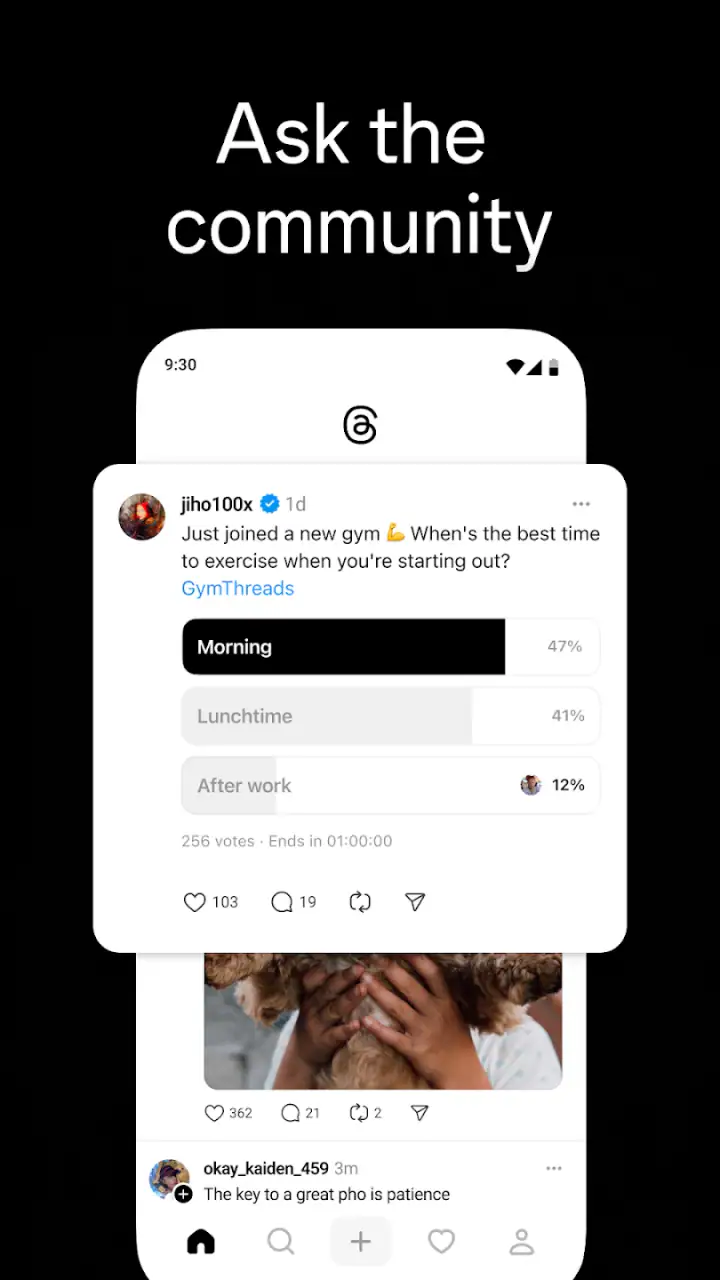
This also changes how I use social media during ordinary moments. Imagine waiting for a train and noticing several people discussing a new film, a local event, or a technology problem. On a visual platform, I might keep scrolling because I have nothing worth photographing. On Threads, I can read the exchange, add a useful detail, or simply save the idea for later. The value comes from conversation rather than presentation.
I also find the format useful for following people whose work is easier to understand through frequent short updates. A designer can explain a process in small steps, a writer can test an idea, and a hobbyist can collect responses before making a larger project. I would not treat every post as authoritative, but the conversational format can reveal context that a single polished update would hide.
Another strength is that the app does not demand a complicated workflow for basic participation. I can read, reply, and post without first learning a large set of creative tools. That simplicity is particularly helpful for someone who feels tired of social platforms that turn every update into a production task.
Its scale matters too. Threads has passed 500 million installs, and the service is developed by Instagram, so it has a strong chance of being relevant to people who already move between familiar social products. That does not guarantee that my preferred contacts will be active, but it lowers the barrier to finding an initial group of accounts and conversations.
How I would shape the feed instead of accepting it as-is
One of my most useful habits is treating the first feed as a starting point, not a verdict on the whole app. I follow accounts deliberately, mute topics that repeatedly distract me, and stop rewarding posts that make browsing feel irritating. A social feed improves when I actively edit it, even if that means unfollowing accounts I originally added out of curiosity.
I would also separate reading time from posting time. When I open the app with no purpose, I can easily drift through replies and lose track of why I picked up my phone. When I open it to check a particular conversation or share one thought, the experience feels more controlled. This simple distinction is more valuable than any single setting because it changes how much attention the app receives.
For people who want to build a recognizable presence, I would recommend choosing a few recurring subjects rather than posting every passing thought. Short-form social apps reward immediacy, but a consistent point of view makes it easier for the right readers to know why they should return. I would keep posts clear, leave room for replies, and avoid turning every disagreement into a debate.
There is a less obvious trade-off here: the same speed that makes Threads enjoyable can make conversations feel unfinished. A post may receive quick reactions but little sustained discussion. If I need a durable knowledge base, detailed documentation, or a carefully organized community archive, I would move that work to a more suitable service and use Threads only to start or point toward the conversation.
Where Instagram and other social alternatives fit better
Threads is not automatically the best choice simply because it is connected to a large social ecosystem. Instagram is the better option when the main purpose is visual storytelling, discovering images and videos, or maintaining a profile where appearance matters as much as wording. I would choose Instagram for a travel diary or a portfolio-style presence, while I would choose Threads for the quick explanation behind the image or the question that follows it.
A private messaging app is a better fit when the audience should be limited to friends, family, or a small team. Public replies can be energizing, but they are not a substitute for privacy. If I need to coordinate plans, share sensitive information, or keep a conversation focused, I would not use Threads as the main channel.
Long-form publishing platforms are also preferable for essays, tutorials, and material that readers need to revisit. Threads can help me test a point or gather reactions, but a sequence of short posts is not always comfortable to search or read later. I would write the complete version somewhere more structured and use the app to discuss selected parts.
Topic-focused communities may be stronger when I need specialist knowledge. A dedicated forum can make it easier to find old answers, follow categories, and stay on one subject. Threads is broader and more spontaneous, which is useful for discovery but less reliable when I need a precise answer from people with a particular expertise.
Finally, I would skip Threads if I dislike public feeds altogether. No amount of feed adjustment changes the basic nature of a social network built around visible interaction. Someone seeking a calm, private, or entirely chronological experience may feel more frustrated than entertained.
The real cost of switching
Moving to Threads costs more than the installation itself because a useful social network requires setup. I need to find accounts, decide which conversations deserve attention, and learn how the tone of the community differs from the platforms I already use. During the first few sessions, the feed may feel uneven simply because it has not yet learned what I want to see.
There is also a time cost in maintaining another public profile. If I already post on Instagram, send messages elsewhere, and follow news through another service, Threads can become one more place asking for attention. I would avoid cross-posting everything automatically in spirit, even when a post could fit both platforms. Each network has a different reading context, and repeating the same update can make the experience feel mechanical.
My practical approach would be to begin with a narrow purpose. I might use Threads for one interest, follow a manageable set of accounts, and return after a week to decide whether the conversations are genuinely useful. That is better than following hundreds of profiles immediately and then blaming the app for a noisy feed.
Privacy and personal boundaries deserve the same attention as convenience. I would review who can interact with my posts, think before sharing location details, and remember that a quick reply can travel beyond the audience I imagined. These are not reasons to avoid the service, but they are reasons to use it with the same care I would apply to any public social platform.
The current version is 410.0.0.55.71, and the app has a 4.1 average from around two million ratings, with roughly 32,000 written reviews. Those figures suggest a large, established audience with mixed experiences rather than a tiny experimental community. I would read that as a reason to try it personally, not as proof that it will suit every feed or personality.
What the everyday experience feels like
In daily use, I would open Threads in short sessions: once to see what people are discussing, once to reply to something specific, and perhaps once to post an idea that does not need a polished format. That rhythm suits the app better than treating it as an endless background stream. The more intentional I am, the more I notice the useful conversations and the less I am pulled into empty scrolling.
Replies are where the app becomes either valuable or tiring. A thoughtful response can turn a small post into a helpful exchange, but a crowded discussion can also become repetitive quickly. I tend to judge a social app by how easy it is to leave a conversation when it stops being useful. Threads works for me when I remember that not every notification deserves an answer.
I would also be careful with the difference between visibility and connection. A post receiving attention does not necessarily mean it created a meaningful relationship. For personal use, I would measure success by whether I found useful ideas, met people with similar interests, or kept up with friends—not by how often a post appeared in front of strangers.
The Teen rating is worth taking seriously for families. I would not assume that a general social feed is automatically suitable for every younger user simply because the app is easy to operate. A parent or guardian should discuss public posting, unwanted replies, and time spent scrolling, then decide whether the young person is ready for that environment.
My recommendation after weighing the alternatives
I recommend Threads to people who enjoy short public conversations, already have some interest in the Instagram ecosystem, and are willing to curate their feed. It is especially appealing if I want to express an idea without producing a photo, follow several ongoing discussions, or discover people through their opinions rather than their polished profiles.
I would not recommend making it the only social app. Instagram remains stronger for visual identity, private tools are better for personal coordination, and focused communities are better for deep specialist discussion. Threads earns its place when it fills the gap between those options: quick, open conversation with less pressure than a visual post.
My final advice is to try it with a clear experiment. Follow a small group of people I genuinely want to hear from, mute distractions early, use public replies thoughtfully, and check after several days whether the app gives more than it takes. If the feed becomes a useful source of ideas and friendly discussion, keep it. If it only adds noise to an already crowded routine, leaving it unused is a perfectly sensible decision.
For me, the best description is not that Threads replaces every alternative. It is a focused social space for people who like to think out loud and respond in the moment. With realistic expectations and a little feed management, it can become a pleasant daily stop; without those habits, it can feel like another stream competing for attention.
FAQs for Threads
What is Threads and how does it work?
Threads is a social media app developed by Instagram, designed for sharing text updates and joining public conversations. Users can post text, photos, and videos to their profile or threads, and interact with others through comments and likes. It's a space to engage with communities and topics of interest.
Is Threads available for both Android and iOS devices?
Yes, Threads is available for both Android and iOS platforms. Users can download it from the Google Play Store for Android devices and the Apple App Store for iOS devices. Ensure your device meets the app's compatibility requirements to enjoy a seamless experience.
Are there any privacy settings in Threads?
Threads offers several privacy settings to help you control who sees your content. You can choose between a public or private profile, manage followers, and adjust comment settings. Additionally, it allows you to block or mute users, ensuring a safe and personalized environment.
Does Threads integrate with Instagram?
Yes, Threads is tightly integrated with Instagram. You can log in using your Instagram account, and your followers from Instagram can easily follow you on Threads. This integration allows for a seamless transition and interaction between the two platforms.
What are the main features of Threads?
Threads focuses on text-based content but also supports photo and video sharing. Key features include customizable threads for discussions, real-time interactions, and a user-friendly interface. It also provides tools for content discovery and personalized recommendations based on your interests and activity.
Pros
- Seamless integration with Instagram.
- User-friendly interface and design.
- Fast and responsive performance.
- Focus on real-time communication.
- Strong privacy controls.
Cons
- Limited customization options.
- Lacks advanced messaging features.
- No desktop version available.
- Notifications can be overwhelming.
- Requires Instagram account.


